


War, energy and freight: Why electrifying trucks is now an economic imperative
Truck electrification should increasingly be viewed as a form of energy resilience, as well as in terms of its climate benefits, writes Simon Smith, CEO of Voltempo.
Simon Smith, the project lead of a UK government-funded initiative to build a nationwide electric heavy-duty truck charging network, highlighted the impact of global energy markets on fleet operations, emphasizing that freight logistics is particularly vulnerable today.
The unpredictable global market environment and ongoing conflicts are exposing weaknesses in existing systems. In the United Kingdom, for example, energy supply for freight transport has become one of the most pressing challenges. Whenever geopolitical tensions disrupt global energy markets, the effects quickly cascade into the cost of goods transportation. Oil prices spike, transportation costs rise, and supply chains feel the pressure almost immediately.
This translates into higher prices for consumers and greater uncertainty for industry, with freight transport sitting at the center of these vulnerabilities. Staying with the example of the United Kingdom, around 90% of shipments involve road transport at some stage, yet the vast majority of heavy-duty trucks still run on diesel. The cost of this fuel is tied to global events, largely beyond the control of logistics operators.
As energy markets grow more volatile, freight becomes increasingly vulnerable—and when freight is vulnerable, the wider economy soon follows.
Electrification is about more than carbon
The electrification of trucks is often discussed primarily in the context of climate targets, but increasingly, it should also be viewed through another lens: energy resilience. Electric trucks run on electricity that is increasingly generated domestically through renewables, nuclear and other UK energy sources. That changes the equation.
Instead of fleets being exposed to global oil price shocks, operators can power vehicles using long-term electricity contracts, on-site generation, battery storage and smart energy management. In other words, electrification allows freight operators to move away from volatile fuel markets and toward more predictable, controllable energy costs. For logistics companies working with slim margins, that stability is growing ever more valuable.
Freight requires a different charging model
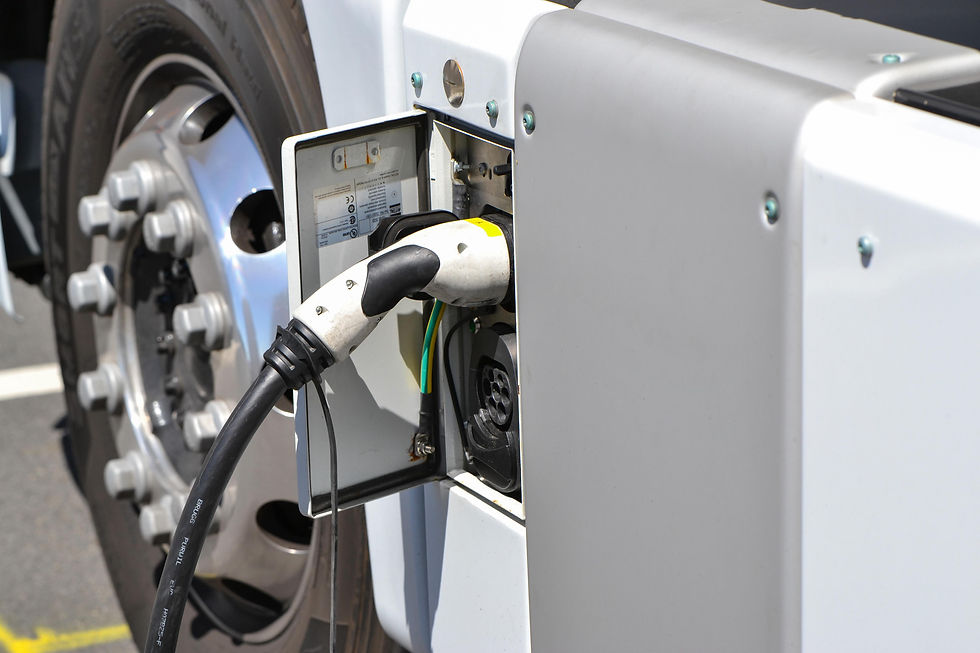
However, electrifying trucks is not the same challenge as electrifying cars. Heavy goods vehicles require enormous amounts of energy, and charging them demands infrastructure built at a completely different scale. A single logistics depot electrifying its fleet can require multiple megawatts of power, equivalent to the demand of a small industrial site.
This means that the traditional public charging model designed for passenger cars alone is not sufficient to solve the problem. The electrification of freight requires large-scale charging infrastructure located where trucks naturally operate: at depots, logistics hubs, and along freight corridors.
In practice, this also means that on-site charging solutions must now be prepared to meet the needs of not only passenger vehicles but heavy-duty trucks as well. In this environment, Parkl’s system offers a unified solution: high-power chargers of up to 720 kW are already available within the hardware portfolio—such as the Schneider StarCharge Fast 720—capable of serving even the most energy-demanding vehicles. Moreover, all of this can be managed on the same digital platform as corporate parking and the entire charging infrastructure, ensuring that operations and administration remain integrated rather than fragmented across separate systems.

However, on-site charging alone is not sufficient. Integrating high-power chargers along freight corridors is just as critical, especially for international transport. Through Parkl’s roaming charging service, companies gain access to one of the most extensive charging networks in the Central and Eastern European region, enabling vehicles to charge reliably not only at depots but also on the road—with unified access management and billing.
This approach allows fleets to access reliable, high-power charging while staying focused on their core activity: moving goods.


Comments